

Ah – Brooks of England – a saddle stalwart of the ages producing the finest leather saddles since the 1880s in true British tradition. The go-to for any luxury, restoration or comfort build. And (since at least 2013) with a modern non-leather range to suit whatever modern urban, gravel-grinder or neo-retro project you have in mind. In this piece I’m going to break down the many downsides of the Cambium saddles based on my experience of buying one and riding it for a little over 1000km or so. In short, they’re expensive, heavy, don’t really do what they’re supposed to do, and not that it really matters, they’re not even from England either!
Brooks have been making leather saddles for a long long time. I’ve never their leather products myself, but they are highly renowned for their ability to mold over time to the user’s arse and those who like them love them. They are also
1 – really really heavy and
2 renowned for needing lots of maintenance and not dealing well with being left out in the rain – which is a pretty major downside for basically any outdoors product sold in the UK/German/Dutch markets.
Cue the Cambium – a wildly popular range of all-weather Brooks saddles made from vulcanized rubber, shedding some weight and doing away with the need for waxing and proofing.
On a long cycle tour a little while back, the lightweight stock saddle on my Cannondale Synapse started digging into the nether regions, and I went on the hunt for a saddle better suited to long tours. A lot of reviews like this one along with their own marketing guff and the pretty pictures on their website persuaded me to purchase a C17. I also see them on bikes (especially Bromptons) all over London, have seen them regularly endorsed on bike forums and by touring cyclists. And I had to admit that Brooks products look really swish on Schindelhauer’s cool belt-drive bikes.
I’ve now ridden on it (on two different bikes) from Aachen in Germany, over the Swiss alps and into Parma in Italy, a little over 1000km and can confidently say that in my experience the single best thing about the Brooks cambium is the high resale value. I’m going to break down some claims and marketing points made about the Cambium and enumerate some other negatives besides, so you can make an informed choice about whether these are right for you.
#1 – Comfort
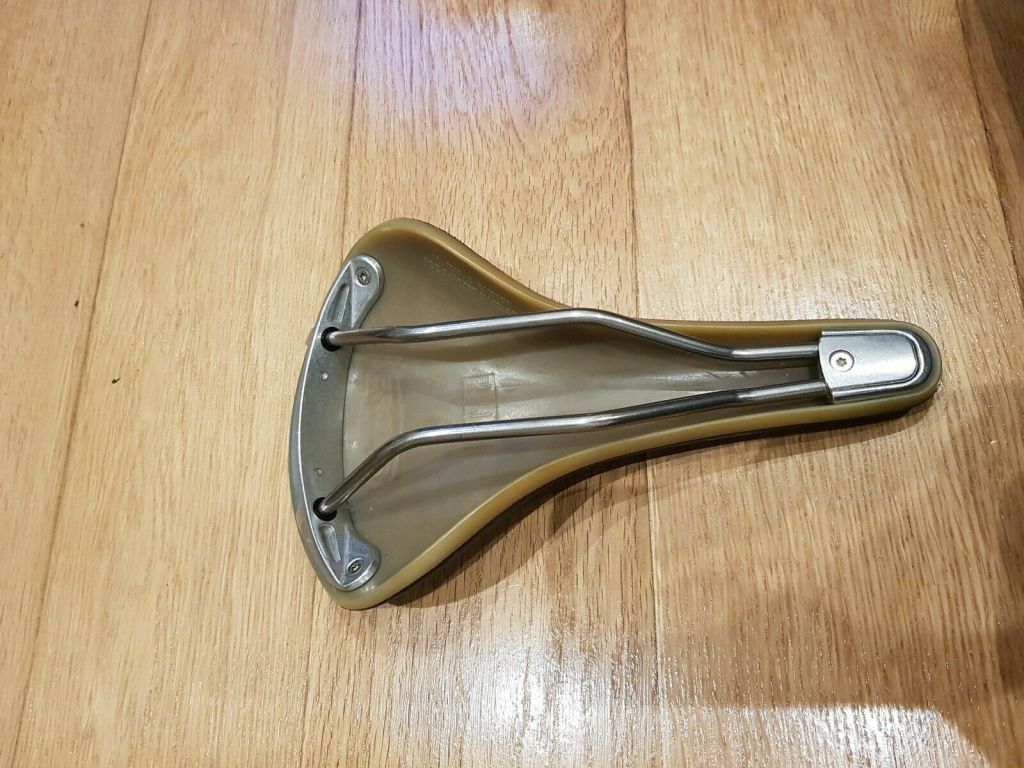
Comfort is probably the first thing you’re looking for if you’re considering a Brooks saddle. On journeys over 30km I found the C17 wildly uncomfortable and I believe the vaunted ‘hammock’ design is the inherent cause of this. As you can see in the picture of the underside, the saddle consists of a shaped piece of rubber, suspended between two metal parts. The rubber itself is hard and essentially unpadded, so it is springy but not squishy. The middle section acts like a bouncy hammock while the nose and the tail of the saddle are, basically, rock solid. So I had the feeling of my sit bones being on something hard and uncomfortable, yet offering a less stable position than many other saddles would offer. A hard, unpadded saddle is fine if you like that (in fact, for shorter journeys I do) – but if you want a hard unpadded saddle you can get them for half the weight and half the price.
Despite trying a few different angles, I never found a truly comfortable position, and unless I tilted the nose up slightly I had to keep re-adjusting my riding position as the saddle seemed to want me to slip forward.
Of course, this is just one person’s experience of one saddle and not everyone’s arses are the same. But the combination of hard vulcanised rubber and fat chunks of steel is just….bad for my butt and I suspect it will be for many others. And at this price, its not something you want buy and then dislike.
Nevertheless, there are many people for whom these saddles do seem to work well and if that’s you, great.
#2 – Style
Ok fine. I do think it looks pretty good on most builds. And after comfort, if you’re considering a Brooks saddle, style points are probably on your agenda. The black top and metallic fittings can blend into almost any frame, and the natural rubber underneath matches well with the typical tanwall/gumwall tire of many gravel and road bikes these days. Again, all subjective. I’ve also looked at the C13 in the flesh and it looks very sharp, and the Cambiums come in a variety of shades and special editions to match your bike.
#3 – Cost
I bought a Cambium C17 on sale for just under £94 a little bit before the pandemic and the bike parts shortage sent prices higher. Most of the Brooks Cambium range are around £90-115 now but some special editions and new releases stretch as high as £175. That’s a lot of money for an arse-cradle – especially given that Halfords sell an entire bike for £140. The single biggest upside of this, and indeed my Brooks experience was that I was able to resell my saddle on ebay for £65, meaning I only faced depreciation of 31%
#4 – Performance and weight
If you’re spending around £100 on a saddle, you probably want to get something worthwhile for your money, and a budget of £100 opens a lot of other good options. If you’re just after comfort, there’s any number of heavy cheap squishy comfy saddles you could opt for instead at a fraction of the price.
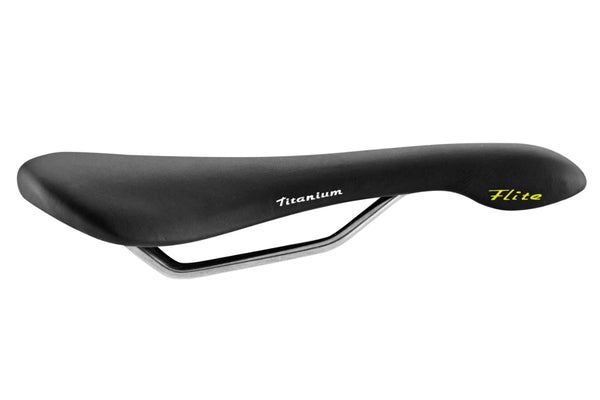
I weighed my Brooks Cambium C17 organic at 423 grams (listed weight, 415g). If you want classic style, performance and elegance, for a £100 and a list weight of just 230 grams you could get the timelessly elegant, performance oriented Selle Italia 1990 Titanium.
If you’re a wallet weenie you can pick up the eminently serviceable Fabric Scoop or Fabric Line saddles from around £20 (and still save 40+ grams versus a Brooks). These also come in loads of different profiles and configurations so you can choose one to suit to your riding style and position, rather than the more one-size-fits all approach of Brooks.
If you’re a weight weenie Fizik can have you dipping down to 185g for just £80 – a 56% weight saving over a cambium, and for £15-20 less pocket money. Brooks own carbon fibre Cambium (the C13) is a whopping £175 and still 285g in its lightest ‘carved’ option.
And if you really wanted the whole British thing, you can get our very own CSC Union Jack saddles at 265g (coming soon, I hope).
I’ve ridden all of these options except the Fizik and while they all have benefits and drawbacks of their own, I would choose any of them for any ride over the Brooks. I might even be tempted to say the Fabric Range are the best of the lot, given their huge range – you can select one for your sit bone width, spine flexibility, riding position, colour and wallet (more expensive parts of the Fabric range = less weight).
The one function that the Brooks has which is really neat, is the loops on the back of the saddle for saddlebags. They’re pretty much the only non-leather saddle that has that.
#5 Durability, maintenance and robustness
This is a mixed bag. It feels robust and solidly built, and after 1000km it was not frayed or scratched at all – this is no doubt part of the reason the resale value was so high. The metal parts feel very solid (no doubt contributing to the weight). I very much approve of their FAQs and maintenance tips on the website which tell you how to maintain the saddle yourself, and that it can all be done by hand, without special tools or mechanical aptitude – props to Brooks for that. More bike stuff should be easily maintained by the casual user without special tools.
On the other hand, the metal sections at each end appear to be held on just by rubber tension and plastic washers. If you lift the bike by the back of the saddle you can feel it lift and loosen slightly especially if you’ve got panniers on. Of course, I wouldn’t advise lifting your bike like this – but it is almost an inevitability sometimes eg adjusting the position of your loaded touring bike on a moving train. You’re likely to grab the first bit that’s there, and that’s going to be the handlebars or the saddle. Over extended use this could become an issue, but 1000km was not enough to conclusively say so. Fixed gear riders often lift the bike by the saddle to re-orient the cranks at traffic lights, so this might give you cause to re-consider the Brooks if you’re on a coaster brake or fixie set-up. But really, their website may say all you need to know on this. Their leather saddles are guaranteed for 10 years. Their Cambium saddles are guaranteed for 2.
#6 Rain proofing and dirt
A major marketing point of the Cambium – at least on Brooks own website – is that unlike Brooks leather saddles they do not need to be waxed/oiled/proofed against rain. That is true though of course it is also true of, like, 98% of all the other saddles in existence. However, in my experience the textured surface of the saddle LOVES dirt and grot. Most smooth plasticky saddles are an easy wipe-clean-with-a-wet-rag-or-paper-tissue job. When I rode my cambium through some muddy, clay filled puddles and dust, I had to get the Muc-Off cleaner out and give it a proper scrubbing to fully clean the crevices in the woven textured cover. So for off road or mucky adventures, or even for a low maintenance around-town bike – I would again not recommend Cambiums.
#7 They eat my shorts
Like Bart Simpson’s nemeses, the Cambium seems to have engaged in an unending binge for eating the garments of my lower half. The textured surface is slightly rough, and wears my jeans and casual shorts down fast. My Rapha shorts seem to have fared better.
Anecdotally I have read other people experience the same issue on reddit and forums etc, though I have no hard evidence to back it up.
#8 Brooks of…..England Italy?
Brooks strongly market their ‘England’ connection, even though they have been owned by Selle Royal of Italy since 2002. Before this gets political I need to preface this by saying I am neither English nor Italian, so I don’t really care or have skin in the game. So I also understand if you don’t care about this next bit.
The Cambiums are manufactured in Italy, not in England. That’s fine. Italy is a lovely place and Europe’s #2 manufacturing powerhouse with a proud cycling and bike part tradition. And Selle Royal make zillions of saddles at all price points and sell them all over the world and lots of them are very good. But Brooks specifically market the England connection – their website is “Brooksengland.com” and their branding is heavy on the “Brooks England, 1866” stuff. And in fairness, their leather saddles are still made in England even though they may be processed/dispatched from Italy. Yet when Brexit came along Brooks ‘temporarily’ ceased exporting to the UK even though they were shipping almost everywhere else in the world. And it took them the best part of a year to come up with a clunky solution (as of Jan 2022 they are now shipping to the UK again, but only on orders over £135). Brexit related difficulties are hardly their own making, and the £135 is related to taxes and tariffs it is true, but thousands of other retailers were in a similar position and were able to make the necessary adjustments far quicker and without a flat-footed block on sales to what could/should be considered their home market. The length of time they took to address this compared to many other retailers seems to lack self-respect for the heritage of the company and the core customer base that has kept them in business since 1866. That all said, besides the limited editions, most of the Brooks range can be bought cheaper from other sites anyway, including as I did, from a German website that got their Brexit act together faster.
Summary
Maybe its the fact that the Cambium tortured my bum for 1000km across Europe, or perhaps I just hate that I fell for the hype of a big name and found it lacking. My experience of the Brooks cambium saddle was that it was expensive, heavy, uncomfortable, not ideal for rain/bad weather and with at least a bit of a question mark on durability. So in future, instead of buying an Italian saddle from a German website despite them being from ‘England’, I’ll stick to one of my beloved Selle Italia saddles which I think are proudly made in Taiwan.
 Common Sense Cycles
Leave a comment